DIY Summer Mold Prevention for Condo HVAC Vents in Toronto
· maintaincenter.com
Introduction
Summer in Toronto brings warm, humid air that can promote mold growth, especially around HVAC vents in condos and apartment homes. Due to the typical high humidity levels and the nature of Toronto’s housing stock, mold around HVAC vents is a common issue that can affect indoor air quality and comfort. The good news is you can tackle this problem yourself with cost-effective DIY cleaning solutions, saving money while protecting your home’s health.

Why Mold Grows Around Condo HVAC Vents in Summer
Toronto’s humid summers combined with the confined air circulation inside condos create the perfect environment for mold. HVAC vents are particularly vulnerable because:
- Condensation buildup: Cool air from the vents meets warm, humid indoor air, causing moisture accumulation.
- Dust and debris: Dust trapped inside vents serves as a food source for mold spores.
- Poor ventilation: Some condo units have limited airflow, increasing humidity near vents.
Addressing mold early is critical to prevent allergic reactions and structural damage.
Cost-Effective DIY Cleaning Solutions for Mold Prevention
Experienced HVAC pros emphasize that regular, affordable maintenance can keep mold at bay without expensive treatments. Here are proven steps to take:
1. Regular Dusting and Vacuuming
Use a vacuum with a HEPA filter to clean dust from vents and surrounding areas weekly. Dust is a primary contributor to mold growth.
2. Use a Mild Vinegar Solution
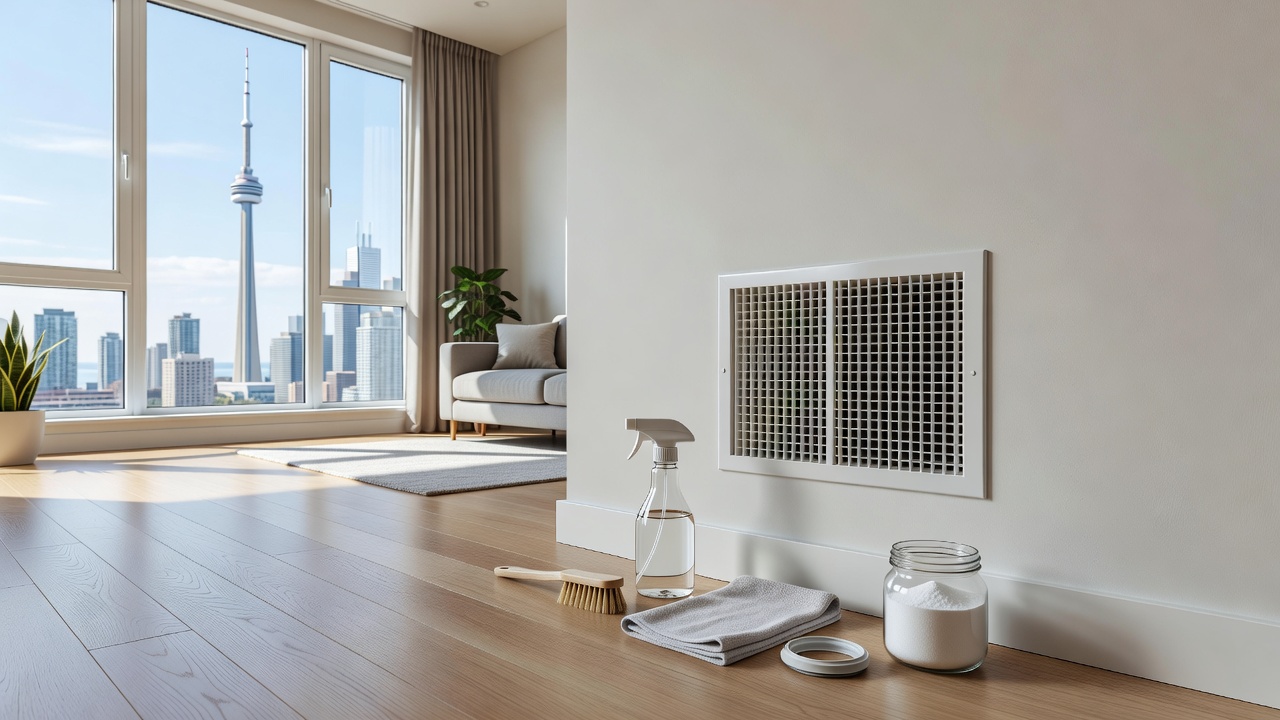
Vinegar is an inexpensive natural mold killer. Mix equal parts white vinegar and water in a spray bottle. Spray the vent covers and wipe after 10 minutes with a clean cloth. Avoid harsh chemicals that could damage vent materials or affect indoor air quality.
3. Baking Soda for Odor and Moisture Control
Sprinkle baking soda lightly around vent edges to absorb moisture and odors. Replace it monthly to maintain effectiveness.
4. Ensure Proper Air Circulation
Keep interior doors open and use fans to improve airflow in rooms with vents prone to moisture buildup. This reduces humidity near HVAC openings.
5. Change HVAC Filters Regularly
Replace filters every 3 months or as recommended. Clean filters reduce dust and moisture accumulation inside the system.
Additional Tips Tailored for Toronto Condo Owners
- Check building codes: Toronto condos must meet ventilation standards. Ensure your unit complies to minimize mold risk.
- Monitor humidity: Use a hygrometer to keep indoor humidity below 60%, ideal for mold prevention.
- Schedule professional HVAC tune-ups: Annual inspections by certified technicians can detect hidden moisture issues early. Learn more about HVAC services available in Toronto.
When to Call a Professional
If mold persists despite DIY efforts or if you notice visible mold inside ductwork, it’s time to call in experts. Professional mold remediation combined with thorough HVAC cleaning ensures long-term relief. For related home maintenance needs, consider verified handyman services to assist with vent repairs or upgrades.
Conclusion
Preventing mold around condo HVAC vents in Toronto during summer doesn’t have to be costly or complicated. By using simple, affordable cleaning solutions like vinegar and baking soda and maintaining proper ventilation, you can protect your home’s air quality and save money. Regular upkeep paired with seasonal professional checks keeps your HVAC system running efficiently and your living environment healthy.
FAQ
What causes mold growth specifically around HVAC vents in condos?
Humidity from warm summer air meets cooler vent surfaces, causing condensation. Combined with dust accumulation, this moisture creates ideal conditions for mold growth.
Can I use bleach to clean mold around HVAC vents?
While bleach kills mold on hard surfaces, it can damage vent materials and produce harsh fumes. Mild vinegar solutions are safer and effective for regular cleaning.
How often should I clean my condo’s HVAC vents in summer?
Weekly dusting and monthly cleaning with vinegar solutions help prevent mold buildup during humid months.
Does improving ventilation really help prevent mold?
Yes, increasing airflow reduces moisture buildup near vents, making the environment less hospitable for mold.
When is professional mold remediation necessary?
If mold covers large areas inside vents or recurs despite cleaning, professionals can safely remove it and inspect the HVAC system.
Contact a verified pro through MaintainCenter.